

Parent Guides
What Should a Junior Rugby League Player Eat Before a Game?

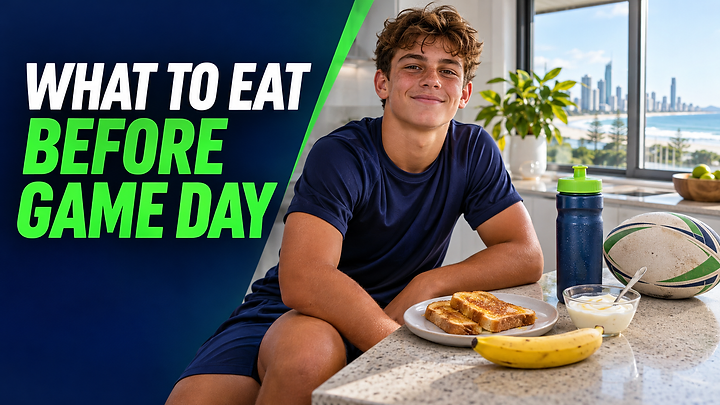
A practical pre-game nutrition guide for Gold Coast junior rugby league families, including meal timing, simple food ideas, hydration and what to avoid.
For most junior rugby league players, a useful pre-game meal is familiar, carbohydrate-based food eaten about 2–3 hours before kick-off, with water sipped regularly. Think cereal with milk and fruit, toast with baked beans, or a simple sandwich—not a “perfect” meal, a new supplement or a last-minute energy drink.
For Gold Coast families managing early starts, travel and warm conditions, the best plan is one your child has already tolerated before training. Keep it simple, allow time to digest and make sure game-day food supports the player rather than becoming another source of pressure.
What should a junior rugby league player eat before a game?
Health and Wellbeing Queensland recommends a small meal containing a good source of carbohydrate around 2–3 hours before activity. Carbohydrate provides energy for the muscles and brain, which matters in a stop-start sport where players repeatedly run, pass, tackle, communicate and make decisions.
Practical pre-game meal ideas include:
- breakfast cereal with milk and a banana
- toast with baked beans and a piece of fruit
- a chicken, cheese or egg sandwich with fruit
- porridge with milk and sliced banana
- yoghurt, fruit and toast
- rice or pasta with a familiar, light topping for a later game.
The examples are starting points, not compulsory menus. Portions should suit the child’s age, appetite, usual eating pattern and time before kick-off. A growing 17-year-old will generally need more than a 9-year-old.
A simple game-day food timeline
Two to three hours before kick-off
Offer a small, familiar meal built around carbohydrate. Include normal foods your child already eats and give them enough time to digest. Avoid turning game morning into an experiment with a new meal, powder, gel or drink.
About 90 minutes to two hours before kick-off
If the family is short on time, Health and Wellbeing Queensland suggests a smaller, lower-fibre carbohydrate option. Examples include fruit and yoghurt, cheese and crackers, or a simple sandwich.
Close to warm-up
Many players will not need more food after a suitable meal. If your child is hungry and already knows they tolerate a small snack, keep it familiar and easy to manage—for example, a banana or a few crackers. Do not force food into a nervous player immediately before activity.
During the game
For activity lasting less than 75 minutes, extra fuel may not be necessary. Water at available breaks is usually the practical starting point. Tournament days, repeated matches, unusually long activity or individual health needs require a more specific plan.
What should they drink before a game?
Water should be the everyday first choice for children. Healthdirect recommends encouraging children to drink before, during and after physical activity, with extra water needed during exercise and in hot climates.
Do not rely on a large drink just before kick-off. A steadier approach is easier:
- encourage normal water intake across the previous day
- send a filled, clearly labelled water bottle
- offer regular sips on game morning and during travel
- use drink breaks when the coach or match conditions allow
- continue drinking after the game.
Very dark urine, headache, dizziness, unusual tiredness, nausea or a dry mouth can be signs of dehydration. If a child is unwell, showing significant symptoms or struggling in the heat, remove them from activity and seek appropriate medical help.
Does a junior player need a sports drink?
Usually, water is the best starting point. Sports drinks are not automatically needed because a child is playing rugby league. They contain carbohydrate and electrolytes, but can also add sugar and acidity when used unnecessarily.
Health and Wellbeing Queensland notes that a sports drink may be helpful during high-intensity activity lasting more than 90 minutes. The Australian Institute of Sport also treats sports drinks as a specialised sports food that may address fuel, fluid and electrolyte needs in particular situations—not as an everyday drink.
A standard junior match is different from a long tournament day or several games in hot weather. If you are unsure about a player’s needs, speak with an Accredited Sports Dietitian or an appropriate health professional rather than copying an adult athlete’s plan.
Foods to be careful with before kick-off
There is no universal list of “bad” game-day foods, but some choices are more likely to create problems when eaten in large amounts or too close to activity:
- very large meals that leave the player feeling heavy
- unfamiliar takeaway or rich, greasy food
- large amounts of high-fibre food immediately before warm-up
- energy drinks or pre-workout products
- new supplements, gels or sports foods the player has never tried
- anything the child already knows upsets their stomach.
Energy drinks are not a suitable shortcut for junior players. Caffeine, stimulant ingredients and high sugar content can create unnecessary risks, and the marketing language on a product does not make it appropriate for children.
What if nerves affect their appetite?
Game-day nerves can reduce appetite or make a full meal feel difficult. Avoid turning breakfast into a battle. Try a smaller familiar option, allow more time and keep the conversation calm.
Useful strategies include:
- preparing food and packing the kit the night before
- using the same trusted breakfast before training and games
- offering two simple choices instead of an open-ended question
- starting earlier so the player does not have to rush
- keeping performance talk away from the breakfast table.
If nerves regularly stop your child eating, sleeping or enjoying game day, look at the wider pressure they may be feeling. Our guide to building confidence in junior rugby league offers practical parent strategies.
Try the plan at training first
The best game-day routine is tested before it matters. Use a normal training day to check:
- how much food feels comfortable
- how long the player needs to digest it
- whether early-morning options are realistic
- which snacks travel well
- how much water the player actually carries and drinks.
Food is only one part of preparation. Pair the plan with the junior rugby league game-day checklist, protect sleep using our junior player sleep guide, and consider the whole weekly workload rather than treating one meal as a performance fix.
A quick checklist for Gold Coast parents
- Choose familiar carbohydrate-based food.
- Aim for the main meal about 2–3 hours before kick-off.
- Use a smaller familiar option if time or appetite is limited.
- Pack water and encourage regular sips.
- Do not introduce energy drinks or new supplements.
- Adjust for heat, travel, tournament formats and individual needs.
- Seek qualified advice for allergies, diabetes, gastrointestinal issues, eating concerns or other medical needs.
Support development without adding pressure
A calm, repeatable routine gives a junior player one less thing to worry about on game day. It will not guarantee a great performance, but it can help them arrive fuelled, hydrated and ready to focus on their role.
If your child wants structured, age-appropriate support with skills, movement and game understanding, contact 1Team Rugby League Coaching to discuss junior rugby league coaching on the Gold Coast.
Sources and further reading
Guidance checked on 12 November 2026.
- Health and Wellbeing Queensland: Fuel for action—nutrition guide for juniors
- Australian Institute of Sport: Performance Nutrition HQ for emerging athletes, carers and coaches
- Australian Institute of Sport: Sports drinks—how and when to use them
- Healthdirect Australia: Hydration tips for children
This article provides general information only. Individual nutrition needs vary, and families should seek advice from an Accredited Sports Dietitian or health professional when required.