

Parent Guides
Junior Rugby League Game-Day Checklist for Gold Coast Parents
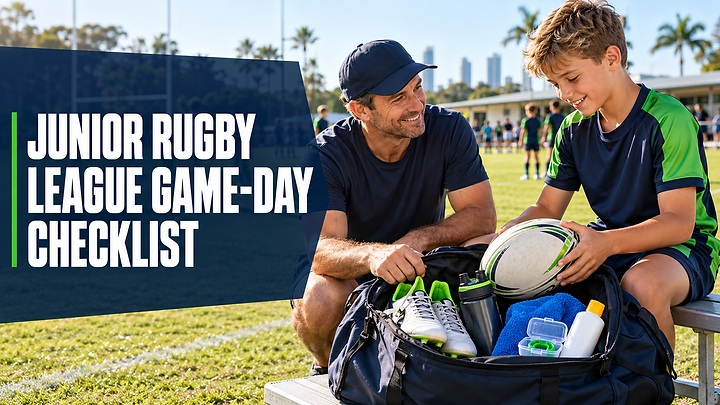
A practical game-day checklist for Gold Coast junior rugby league families, covering what to pack, hydration, food, heat preparation, arrival and calm parent support.
A smooth game day does not need a complicated routine. For most junior rugby league players, the best preparation is simple: know the schedule, pack the essentials the night before, arrive with enough time to settle in, and keep food, fluids and parent instructions familiar.
The short answer: pack boots, playing gear, mouthguard, a clearly labelled water bottle, sunscreen, a hat for time off the field, a towel, a change of clothes and a familiar snack. Check the venue and kick-off time, eat a normal pre-game meal that your child already tolerates, and encourage regular water before, during and after activity.
This junior rugby league game-day checklist is designed for Gold Coast families with players roughly aged 9–17. Club requirements can vary, so always follow your team manager, coach and venue instructions.
Junior rugby league game-day checklist
Playing gear
- Football boots and suitable socks
- Team shorts, jersey and any club-required training gear
- Well-fitting mouthguard
- Any approved protective equipment your child normally uses
- Spare laces and a small roll of tape, if useful
Hydration and food
- Clearly labelled personal water bottle
- Familiar pre-game meal or snack
- Simple post-game snack if the trip home will take time
- Cool bag and ice brick when food needs to stay cold
Gold Coast sun and weather
- Sunscreen
- Hat for before and after play
- Light towel
- Dry shirt, shorts and underwear
- Warm or wet-weather layer when conditions require it
- Plastic bag for muddy boots and wet clothing
Useful admin items
- Confirmed ground, field number and kick-off time
- Coach or team-manager contact details
- Any medication and management plan required by the club
- Phone, payment method and directions saved before leaving
What should a junior player eat before a game?
Keep the pre-game meal familiar. Game morning is not the time to test a new supplement, energy drink or unusually heavy meal. Choose foods your child normally eats and tolerates, and allow enough time that they do not feel rushed or overly full at warm-up.
The Australian Institute of Sport provides training and competition nutrition resources for emerging athletes, carers and coaches. Individual needs differ with age, appetite, kick-off time, weather and total activity, so avoid treating one rigid meal plan as suitable for every junior player.
Practical options may include a regular breakfast or light meal built from familiar foods, plus a small snack if there is a long wait before kick-off. If your child has allergies, a medical condition or ongoing stomach problems around exercise, seek individual advice from an appropriate health professional.
How should junior players hydrate on game day?
Do not wait until the final minutes before warm-up and ask a child to drink a large amount at once. Encourage regular water across the day and make the bottle easy to reach during scheduled breaks.
Healthdirect advises children to drink water before, during and after sport, and notes that extra water is needed with exercise and hot conditions. Its guidance also identifies water as the best everyday drink for children. Read the official hydration tips for children.
A personal bottle is also easier to label, refill and keep hygienic. Pack it full, check whether the venue has refill points and bring additional water for long carnival days or multiple matches.
Preparing for heat on the Gold Coast
Warm and humid conditions can change what players need. The official Play Rugby League guidance reminds coaches to plan for sun protection, hydration, shaded breaks and changing environmental conditions. Parents should check the forecast, provide sunscreen and a hat for time off the field, and follow any changes made by the club or match officials.
If a child feels unwell, develops a bad headache, feels dizzy or shows other concerning symptoms, remove them from activity and alert the coach or sports trainer. Healthdirect recommends moving a child who may be dehydrated to a cool place and giving water; urgent or severe symptoms require appropriate medical help.
The Play Rugby League policies and guidelines page links to current heat and other safety guidance. Local officials—not parents on the sideline—decide whether match conditions need to change.
When should families arrive?
Work backwards from the team’s requested arrival time, not only the kick-off. Build in time for parking, finding the correct field, meeting the team, changing, strapping and warming up.
Arriving extremely early can create a long wait, while arriving late can make a young player feel rushed before the game begins. The best target is the arrival time supplied by the coach or team manager, with a sensible travel buffer for busy Gold Coast grounds.
A simple night-before routine
- Check the message: confirm the venue, field, kick-off and requested arrival time.
- Check the uniform: place every playing item together.
- Pack the bag: use the checklist above and label key items.
- Fill and chill: prepare the water bottle and safe food storage.
- Check the route: allow for parking and weekend traffic.
- Then switch off: once preparation is finished, let the player relax.
If the weekly schedule already feels crowded, see How Much Rugby League Training Is Too Much for a Junior Player? for a broader look at sleep, soreness, motivation and total load.
What should parents say before the game?
Keep the final message short. A player does not need a second tactical briefing from the car park. One calm cue—such as “communicate early”, “support your teammates” or “enjoy competing”—is easier to use than a list of corrections.
After the match, allow emotions to settle before reviewing every moment. Ask what the player enjoyed, what felt difficult and what they want to work on next. For more ideas, read How to Help Your Child Build Confidence in Rugby League and How to Improve Decision-Making in Junior Rugby League.
Common game-day mistakes to avoid
- Trying a new food, drink or supplement immediately before playing
- Leaving the mouthguard, boots or water bottle until the morning to find
- Assuming the ground and kick-off are the same as last week
- Giving several tactical instructions immediately before warm-up
- Ignoring forecast heat, rain or field-condition updates
- Turning one forgotten item or error into a stressful start for the player
Make game day easier for your junior player
A checklist will not control the result, but it can remove avoidable stress. When the practical details are handled, the player can focus on warming up, communicating and contributing to the team.
Want to help your child feel more prepared in real game situations? Contact 1Team Rugby League Coaching to discuss a suitable skill or game-understanding focus for your junior player on the Gold Coast.
Sources and further reading
Official guidance checked on 29 October 2026. Follow current club, competition and medical advice for your child’s circumstances.